
Search Maryland Released Inmates
Maryland released inmates records can be searched through the Department of Public Safety and Correctional Services and through local county detention centers across the state. The DPSCS runs an online inmate locator that covers state prison facilities, while each of Maryland's 24 county jurisdictions keeps its own jail records for released inmates. You can also use the VINELink notification system to track custody changes and find out when someone gets released from a Maryland facility. This page covers all the ways to search for released inmates in Maryland, from state databases to county-level tools and formal records requests.
Maryland Released Inmates Overview
Maryland Released Inmates Locator
The Maryland Department of Public Safety and Correctional Services runs the main database for finding released inmates in the state. The DPSCS Incarcerated Individual Locator lets you search by first or last name to find people held in Division of Correction facilities and Patuxent Institution. The tool shows the person's name, date of birth, current facility, and inmate ID number. It covers all 15 state prison locations across Maryland.
There are some limits to what this locator shows. It does not list people who have already been released from custody. Short-sentenced individuals housed at Division of Pretrial and Detention Services facilities are also left out. You will not find mugshots or detailed conviction data on this tool. For released inmates in Maryland, you need to use other methods like VINELink or a formal records request through the county that held the person.
The DPSCS main office is at 6776 Reisterstown Road in Baltimore, MD 21215. You can call them at (410) 585-3300 for general questions about released inmates in Maryland. The department has four key divisions: the Division of Correction, Division of Parole and Probation, Division of Pretrial and Detention Services, and Patuxent Institution. Each one handles different parts of the corrections system. About 10,000 correctional workers staff these Maryland facilities, and roughly 12,000 people are on parole or supervised release at any given time.

The DPSCS website is the starting point for any search related to released inmates in Maryland state prisons.
How VINELink Tracks Released Inmates in Maryland
VINELink is a free tool that tells you when someone gets released from jail or prison in Maryland. The system sends alerts by phone, email, or text within 15 minutes of a custody change. You can search by name or ID number at VINELink Maryland. It works 24 hours a day in both English and Spanish.
To use VINELink for Maryland released inmates, go to the site and select Maryland from the state list. Type in the person's name or offender ID. The system will show you their custody status and which facility holds them. You can then sign up for alerts so you get a notification the moment that person is released. This is one of the best ways to track released inmates in Maryland because most county jail websites only show people who are still locked up. VINELink fills that gap. The toll-free number is 866-727-2846 if you want to register by phone instead of online.

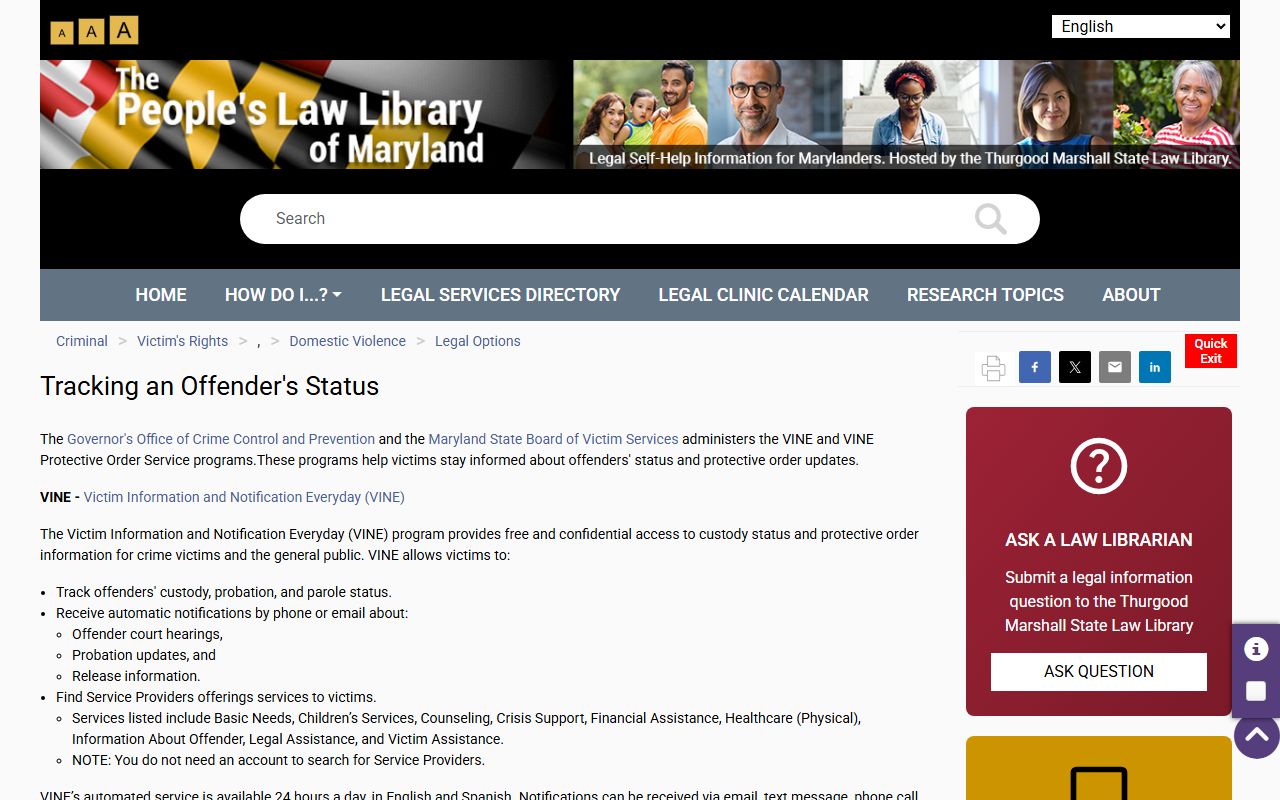
The People's Law Library of Maryland also has a helpful page about tracking offender status through VINE and other tools.
Maryland Court Records for Released Inmates
The Maryland Judiciary Case Search is another way to find records tied to released inmates. This system covers criminal cases from all Maryland courts. You can look up charges, court dates, sentencing info, and case outcomes. It does not show jail booking records directly, but it gives you the court side of things. Case numbers from this search can help you track down more detailed records from a county detention center.

Keep in mind that court records and jail records are kept by different offices in Maryland. The court handles case filings, charges, and sentences. The sheriff or corrections department handles booking records, mugshots, and release dates. You may need to contact both to get the full picture on a released inmate in Maryland.
Note: Court records show case outcomes and sentencing, but the county detention center holds the actual booking and release records for Maryland inmates.
State Prisons vs County Jails in Maryland
Maryland splits its correctional system between state and county levels. State prisons hold inmates sentenced to more than 18 months. County detention centers house pre-trial detainees and people serving shorter sentences of 18 months or less. This matters when you search for released inmates because you need to know which type of facility held the person.
Maryland has 15 state correctional facilities. Some of the major ones include North Branch Correctional Institution in Cumberland, which is a maximum security prison. Jessup Correctional Institution and Maryland Correctional Institution in Hagerstown are medium security. The Maryland Correctional Institution for Women in Jessup is the main facility for female inmates. The Metropolitan Transition Center in Baltimore serves as a reception center where inmates are processed before going to their assigned facility. Each of these state prisons sends released inmates data to the DPSCS database. If someone served time in a state facility and got released, start your search with the DPSCS locator or contact the main office.
County jails work differently. Each of Maryland's 24 jurisdictions runs its own detention center. Some counties have online inmate rosters and some do not. Baltimore County, for example, intentionally does not post inmate records online as a privacy policy. Other counties like Somerset County have detailed online systems through third-party providers. When looking for released inmates from a county jail in Maryland, you will often need to call the detention center or submit a formal records request.

Requesting Released Inmates Records in Maryland
The Maryland Public Information Act gives you the right to request inmate records from any state or county agency. Under Maryland Code, General Provisions Section 4-201, public records are open to inspection. You do not need to be a family member or give a reason. Anyone can ask. The agency has 30 days to respond under Section 4-203.
One of the best parts of the MPIA is the fee structure. Section 4-206(c) says the first two hours of search time are free. After that, you pay the actual cost of staff time plus $0.25 per page for copies. Electronic records sent by email are often free. Fee waivers are available under Section 4-206(e) in some cases. The Maryland Attorney General's MPIA page has more details on how to file a proper request for released inmates records.

When you send a request for released inmates records in Maryland, include the person's full legal name, any known aliases, date of birth, and the approximate dates they were in custody. Be specific about what records you want. The more detail you give, the faster the agency can find what you need. Most requests go to the county sheriff's office or the detention center records division.
Maryland Laws on Released Inmates Records
Several Maryland laws control what inmate records the public can see. The Correctional Services Article Section 3-601 requires facilities to keep accurate records on every person they hold. Section 3-612 spells out what information is available to the public about inmates. This includes basic facts like name, charges, and custody status. But Section 3-614 sets limits on what can be shared.
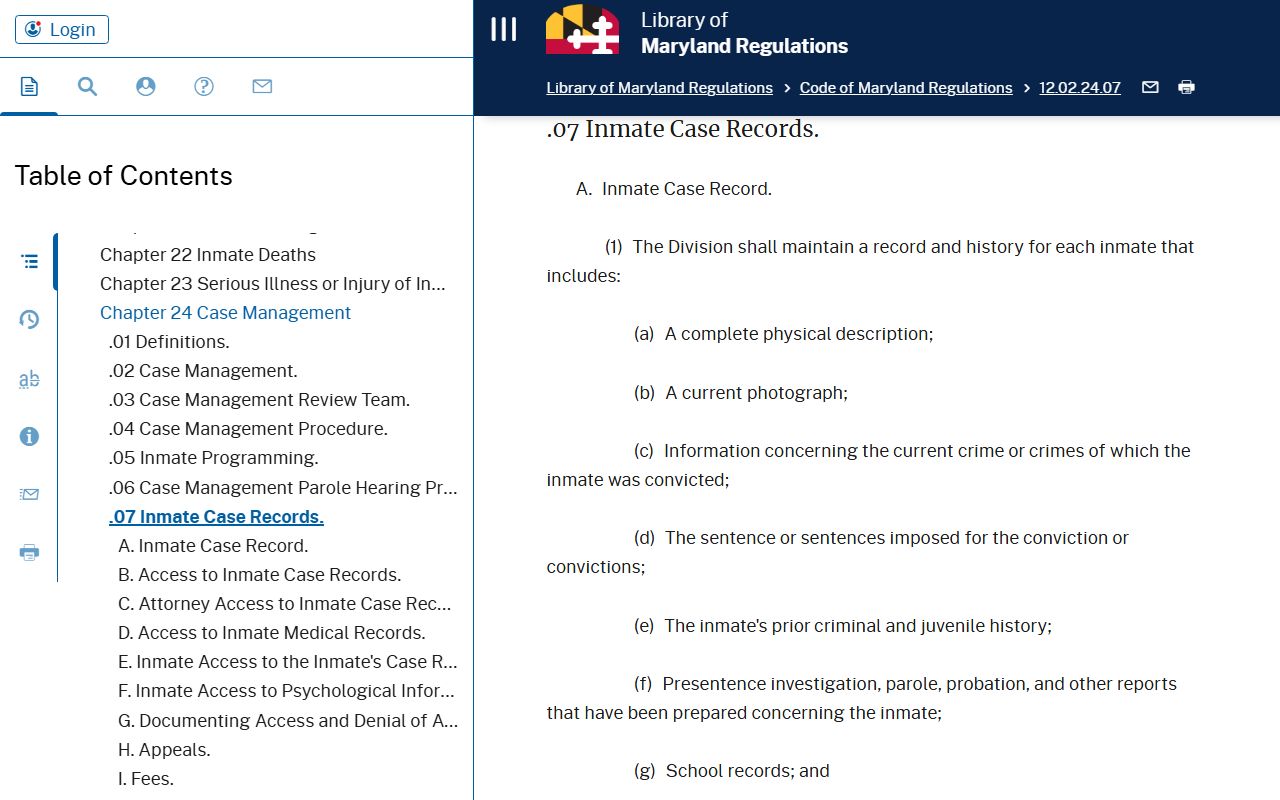
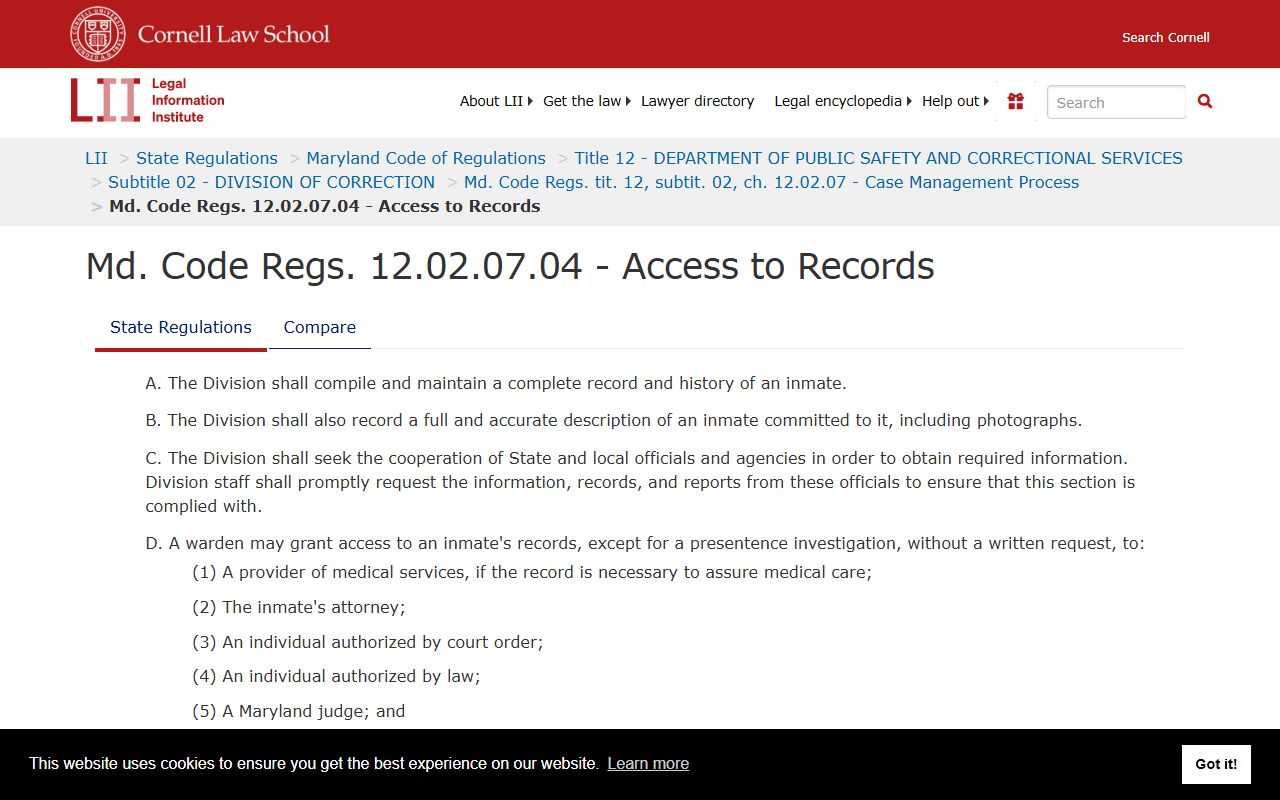
COMAR 12.02.24.07 covers inmate case records specifically. Under these regulations, you must make a written request to see an inmate's case records. The warden has the authority to grant or deny access. The full text of COMAR 12.02.24.07 is available on the Maryland regulations website. A related regulation, COMAR 12.02.07.04, says a warden may grant access to records without a written request in some situations, except for pre-sentence investigations.
Some records are always off limits. Medical and mental health records are confidential. Juvenile records are sealed. Disciplinary reports and security classification documents are not public. Social Security numbers and victim information are also protected. Under Criminal Procedure Section 11-104, victims have the right to be notified about custody changes through systems like VINE, but that information flows only to registered victims. The general public uses the standard search tools and MPIA process to find released inmates data in Maryland.
Released Inmates Records in Maryland
When you get records on released inmates in Maryland, the documents typically contain several types of information. Booking records show the person's full legal name, date of birth, physical description, and booking photograph. They also list the date and time of arrest, the arresting agency, criminal charges filed with statute citations, and any warrant or case numbers.
Release records tell you when the person left custody and how. The release type might be bond, sentence completion, or transfer to another facility. You will also see court disposition information and related case numbers. These records come from the county detention center or state facility that held the person. Some of this data shows up on online tools, but the full set usually requires a formal request.
Records that are not public include anything medical or mental health related. Disciplinary reports from inside the facility are restricted. Pre-sentence investigation reports require a special request and are rarely given to the general public. Psychological evaluations need written authorization from the subject. Keep these limits in mind when you request released inmates records from any Maryland facility.
Browse Maryland Released Inmates by County
Each county in Maryland runs its own detention center with separate booking and release records. Pick a county below to find local contact info, search tools, and records request details for released inmates in that area.
Released Inmates in Major Maryland Cities
Residents of major Maryland cities are processed through their county detention center. Pick a city below to learn which facility handles released inmates records in that area.